Been a bit quiet lately.
Lots going on in my interior world.

Not much happens on the outside
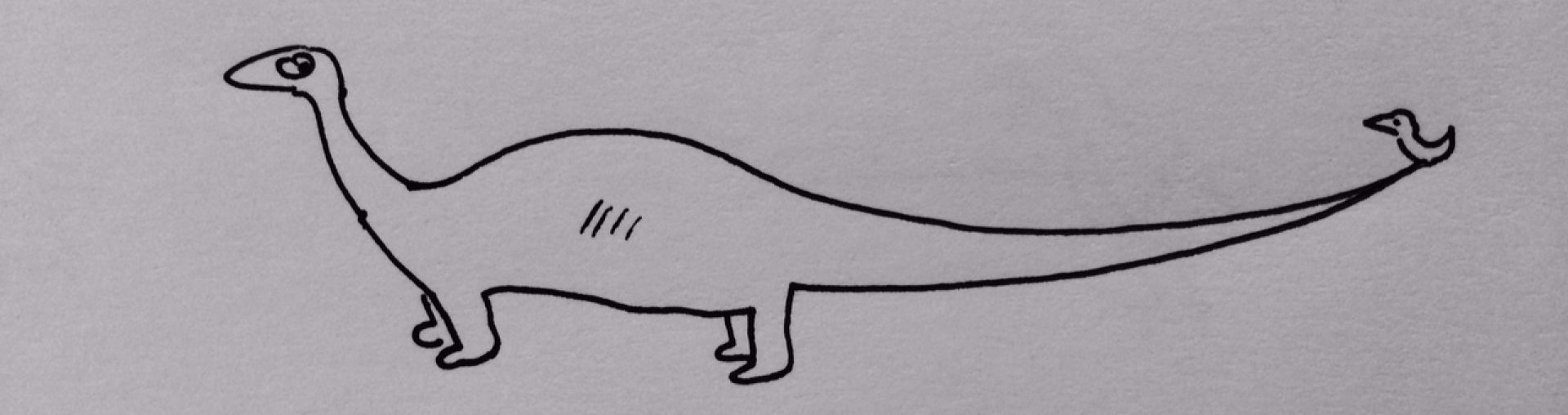
Been a bit quiet lately.
Lots going on in my interior world.
Not much happens on the outside
This is the kind of week I’m having.
Good day to you.
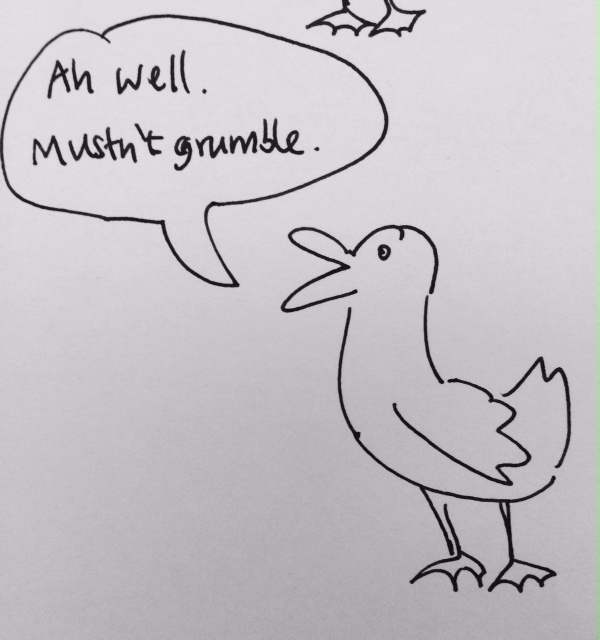
Duck-billed platitude
Why do we become who we become?
I puzzle over this a lot.
Fixated that I could’ve been better, done better, achieved more, ‘if only’, ‘if only’, ‘if only…’
Who were you supposed to be?
Apparently, who we become isn’t just a matter of nature or nurture.
For instance, murderers and psychopaths are both born and made.
As I found out when I saw this article.
Your experiences as a child change and shape your developing brain.
You can start off with a brain that has the potential to become an inspiring, engaging, intelligent thought leader.
Or a brutal, un-remorseful serial killer.
How you turned out today could all depend on how you were treated in your early life.
Change brains at the next station
So … I was wondering who might we be right now, if we’d had the ‘perfect’ childhood?
And what is ‘perfect’, anyway? Who can judge?
Could we ever reduce our life experiences to a scaleable rating system, à la TripAdvisor?
I fear failing as a mother. That every harsh word or negative comment I make could be damaging my offspring’s sweet, tender, fluffy psyche beyond repair.
That my injured childhood might inflict irreversible harm to my own children. Shaping and changing the people they’ll become, all the way down the brain line.
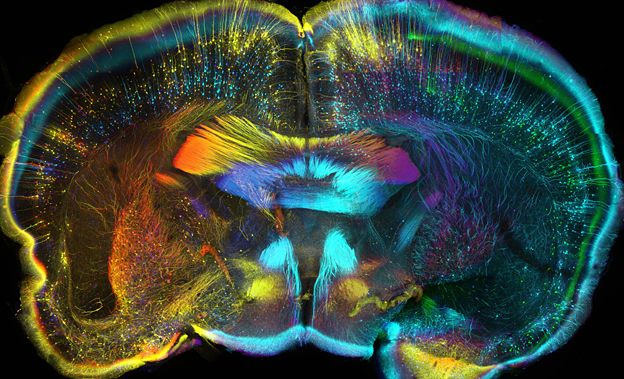
Nerve cells in an adult mouse brain
This beautiful picture of a brain is from the Wellcome Image Awards finalists 2015. See more fascinating images from the art of science here.
So, I went for a walk, and I stood to watch the river as it slid past.
The sunshine made the water’s surface a mass of glinting white lines and triangles of light. Moving. Animated.
Shining gulls over smooth green glass.
I stared, mesmerised by the changing surface.
Then I got the sudden vivid impression, the absolute awareness that
IT WAS NOT THE RIVER WATER THAT WAS FLOWING PAST
BUT THE BANKS THAT WERE MOVING.
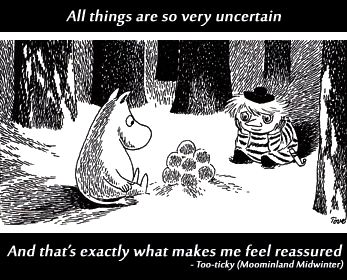
Things are comfortingly uncertain
The more I looked, the more I could see how it was the river banks that were rushing along. Green turfed sides surging ever onwards, creating a rippling wake on the surface of the water.
I felt disorientated.
As if I was suddenly standing on the moving floor of a funfair ride.
I actually felt the urge to grip on to a nearby tree, to stop myself falling off this crazy earth ride.
It was as if I could suddenly see through the charade:
Perhaps the river water is always still.
Perhaps it is the earth that always moves.
And what we perceive is a visual joke that never stops.
Which reminded me: Perception is everything.
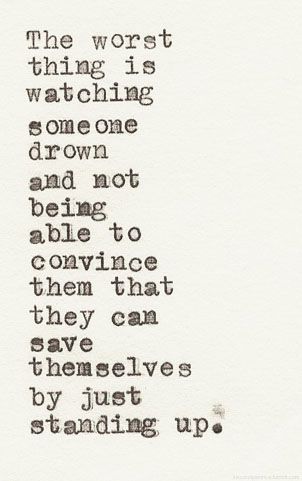
Perception is everything
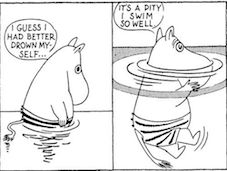
pity I swim so well
I saw the birds perched in a tree at the end of the road.
Black bird shapes on black branches, settled in silhouette against the cold white winter sky.
I count 10. I think there are 10.
What is in their minds? I know birds cannot be said to have consciousness of self in the same way humans do. (Or can do.)
So. I am sitting, staring out of the window and wondering about the birds.
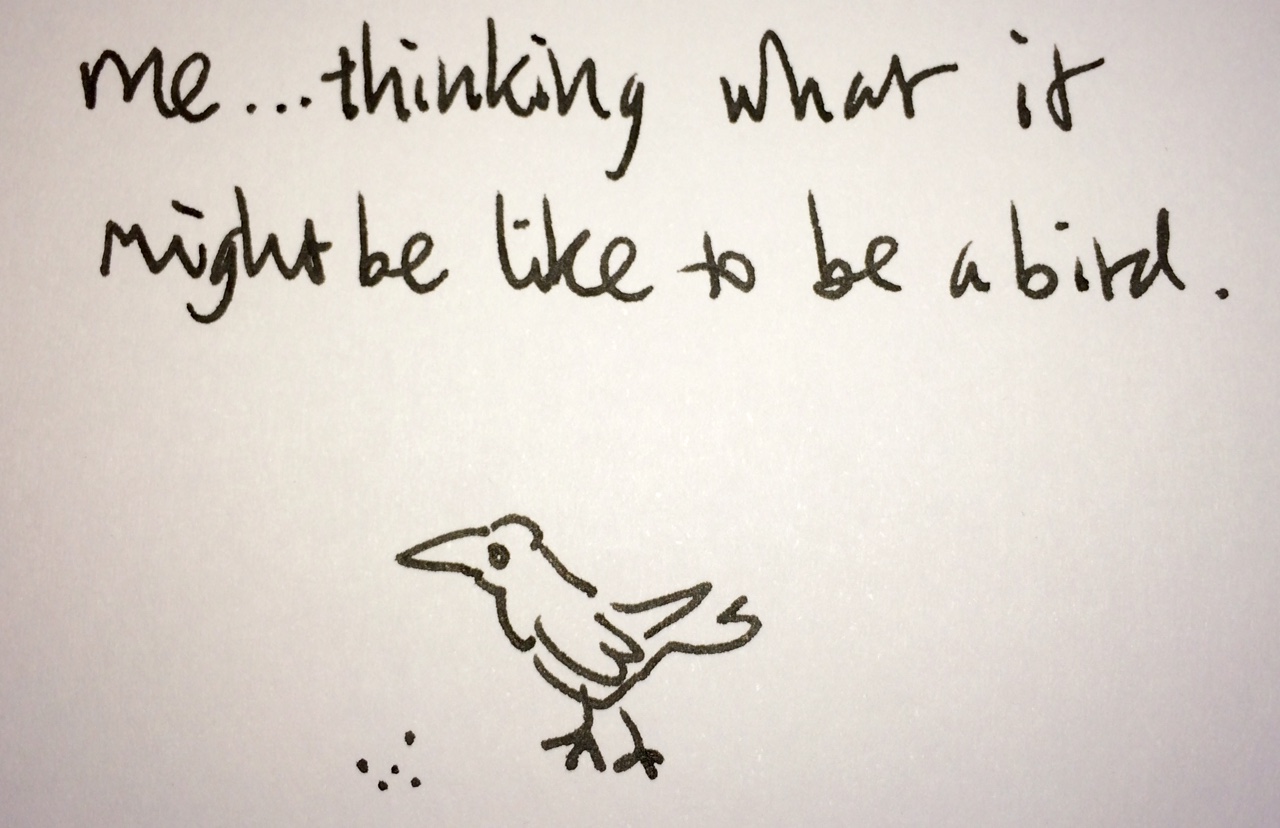
Thinking about being a bird
I try to get into their birdy brains. I am thinking of my claw-like twist-stick feet curled around the cold twig of the branch.
I am flicking, fleeting random flying thought of tree, bird, branch, twig, claw, bird, sky, fly, twig, tree, bird, branch, sky.
But I have no language. Not in the way that humans have it.
For all I know the Bird Word for tree is ‘Kaaah’. And the Bird Word for sky is ‘Kaaah’.
I imagine their concept of the world is not built on words, but on the black and white cold reality of tree, sky, earth. And the moment, which is always Now.
No past. No future. Birds live in The Moment.
All 10 birds – suddenly, almost as one – take to the air. Uncurl those cold feet from cold bark and take flight into the white sky.
No chatter from them about when, or where. Or how it will be done. Just unfurl and fly, knowing all will follow. All will follow.
A moment to perch. A moment to fly. Always living in the Now.
I feel a bit sad watching the dark birds scattering in the sky.
I am wishing I could also live in the Now. Forget the past. Not worry about the future. Just stretch out. Step off. And fly.
Three young artists diagnosed with Multiple Sclerosis were given a brief — to create something good out of something bad.
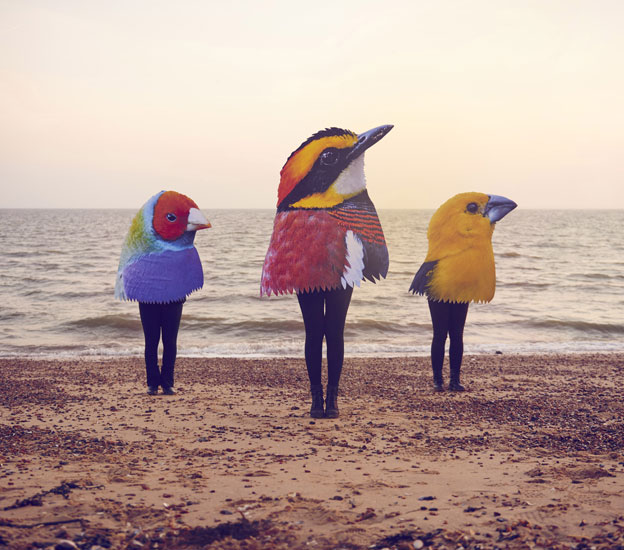
Bird heads on beach
The one above I thought was beautiful and thought-provoking. The birds look longingly into the sky; maybe they feel grounded? Are they thinking they will never fly again? Do they miss their wings?
Whatever has happened to their bodies, they are still beautiful.
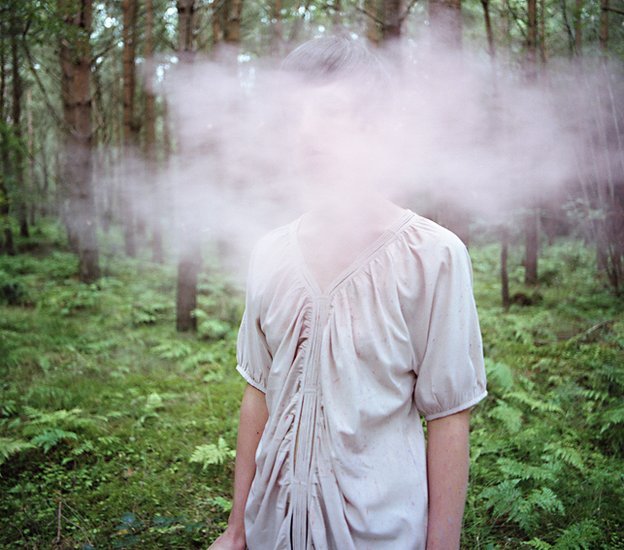
Feeling misty
This one speaks to me. I’m wondering if the artist is aware that their own perceptions and observations will perhaps become clouded, compromised, as the disease progresses.
Or perhaps, that others will perceive them differently — somehow less — invisible — faceless — now they are diagnosed with a ‘dread disease’.
The other point I took from the article was that no two MS diagnoses are the same.
My own experience of watching someone in pain and suffering was not at all beautiful.
But having seen these artists’ reactions, I am left impressed by their positivity.
The disease shaped me too … maybe for the better, in ways I’ll never truly understand.
Did you read this story?
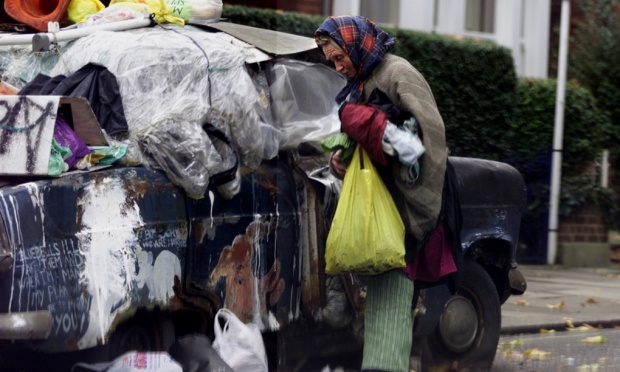
Anne Naysmith, ex Royal College of Music, lived her life on the edge of society
So many questions I’d like to ask Anne.
Why would an obviously gifted woman choose a life on the edge?
Living in a car (or on a railway embankment) must have been tough and uncomfortable. What words could’ve persuaded her to come back to ‘normal’ life?
What is ‘normal’ life, anyway?
Why did she prefer her own new world?
How many other people end up living lives like this?
Leaving things they love behind (deliberately, unintentionally, sadly?), and proceeding to go through a new, pared-down kind of life.
Makes you think.
I was about 11-12 years old, on summer holiday in the Norfolk Broads with my mum, dad, 2 sisters and a cousin. I was one of the youngest children.
It was early afternoon on a clear and sunny late summer’s day. We’d moored our hired long boat in a very quiet area next to fields and grassland. There were no pubs and no other tourists around.
This was an unusual holiday for our family. We’d never hired a boat before, or been anywhere so ‘cut-off’ from the world. We usually stayed in busy seaside resorts.
I wandered off alone to explore the expanse of flat open fields, which were criss-crossed with hedgerows and ditches. I came to an opening in the hedgerow by an old wooden country stile and I stopped.
It was then I heard the most beautiful music; it seemed to come and go on the breeze. It was so sweet, so beautiful, I could hardly breathe.
I remember it as a circular tune — plaintive yet joyful. It could have been a flute or a pipe. No accompaniment, just ethereal, otherworldly music that faded in and out on the air.
It was so wonderful to hear, tears squeezed out of my eyes and ran down my face. I remember moving my head about, afraid to lose the sound, desperate to catch it on the breeze if it faded.
I thought ‘No-one will ever believe how lovely this is’.
How I could never explain.
Even as I regretted missing a moment of the music, I wanted to share the experience with my sisters and cousin, so we could remember it together.
I ran back to the boat, and after some frantic persuasion I hurried them along with me.
When we got back to the stile I begged them to stand quietly and listen. But they started mucking about – my younger boy cousin was bored within 2 minutes and started a silly game with my middle sister. They were pushing each other, which led to raucous laughter, more horseplay and raised voices.
The ‘spell’ — or whatever it was –was broken.
We never heard a thing.
My older sister shrugged and said it was probably someone playing music that I overheard.
But there was no one moored in that vast empty landscape but us. Our family back at the boat were not playing music (and certainly wouldn’t be interested in listening to ‘weird folk music’).
As we headed back to the boat I dawdled behind. I felt like crying.
By trying to share something magic, I had lost it.
Since then, I’ve had a sense that the music was meant just for me.
Maybe no-one else would have even heard it.
But to share joy is in my nature.
I went back to the hedgerow later, alone, just before it got dark. But I never heard the music again.
We have to give something to the world if we want to get something back.
Shine your light. And help others to shine.
Who else puts on a mask, just to face the day?
I was doing my make-up today and suddenly realised what a strange ritual this is.
Shading in an acceptable face.
Drawing on a pair of watchful eyes.
Crayoning on a smile.
A face to show to no-one but my own four walls. And my family.
Do they see me (ME – the real ‘me’) through the mask?
A woman smiling as she chops the carrots or sorts through washing.
Today I didn’t want to wear the mask. I wanted to cry at the mirror instead of attempt to change its reflection.
To rage against age and pain and loss.
But here I am.
Eyes drawn on. Smile sketched in.
Facing the world.
 the crone